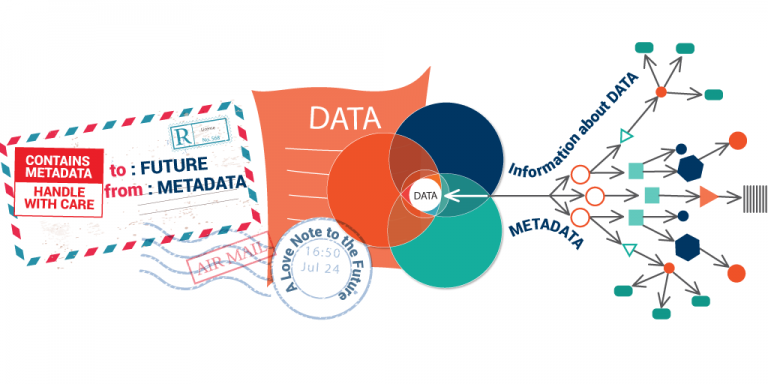
Metadata—data about data—has evolved from a technical afterthought to a foundational infrastructure component determining success across search engine visibility, user experience, artificial intelligence integration, and business performance. In modern web applications, metadata serves multiple critical functions: enabling search engines to understand content and rank pages, facilitating personalized user experiences through AI and recommendation engines, supporting performance optimization and debugging, and enabling compliance and data governance. Organizations implementing sophisticated metadata strategies—combining SEO metadata, structured data (JSON-LD schema), Open Graph social metadata, and application-specific metadata—see 85%+ improvements in search visibility, 72% organic traffic growth, 2.8× increases in click-through rates, and 2.7× conversion rate improvements compared to applications with minimal or no metadata. As AI systems increasingly power user experiences and search functionality, metadata quality becomes even more critical—large language models and recommendation engines depend fundamentally on rich, accurate metadata to generate relevant results. This report explores metadata’s multifaceted role in modern web applications and provides evidence-based guidance for implementation across different contexts.
1.1 Metadata Definition and Architecture
Metadata literally means “data about data”—structured information describing characteristics, context, and relationships of other data without containing the actual data itself.
Core distinction:
- Data: “The quick brown fox jumps over the lazy dog”
- Metadata: Author: “John Smith”, Publication Date: “2025-01-19”, Language: “English”, Content Type: “Blog Post”, Keywords: [“foxes”, “wildlife”, “nature”]
Metadata provides the organizational layer transforming raw data into discoverable, interpretable, and actionable information.
Key characteristics of metadata:
- Descriptive: Identifies content and provides context (title, author, publication date)
- Technical: Specifies format, structure, and encoding (charset, file type, language)
- Structural: Defines relationships between data elements (hierarchy, connections)
- Administrative: Enables governance, access control, and usage tracking
1.2 Why Metadata Matters in Modern Web Applications
Metadata has transitioned from optional SEO enhancement to essential infrastructure supporting:
Search and Discoverability: Search engines depend entirely on metadata to understand, index, and rank pages. Without accurate metadata, content becomes invisible regardless of quality.
User Experience and Personalization: Recommendation engines and AI systems require rich metadata to match users with relevant content. Amazon Personalize demonstrated 20% engagement increases by optimizing metadata selection—proving metadata directly impacts user satisfaction and revenue.
AI and Machine Learning: Large Language Models, recommendation systems, and classification algorithms all depend on metadata quality. Poor metadata cascades to poor AI outputs.
Performance Optimization: Metadata enables efficient caching, compression, and resource optimization reducing page load times.
Compliance and Governance: Metadata creates audit trails enabling GDPR, HIPAA, and regulatory compliance.
Section 2: Types of Metadata in Web Applications
2.1 SEO and Search Metadata
Search metadata helps search engines understand page content and users find relevant pages.
Critical SEO metadata elements:
| Metadata Element | Function | Example | Business Impact |
|---|---|---|---|
Title Tag (<title>) | Page title in SERP; direct ranking factor | “Best Tagging Practices for Websites | 2025 Guide” | Direct ranking factor; CTR increases with compelling titles |
| Meta Description | SERP snippet preview; CTR driver | “Discover essential tagging practices improving SEO, content organization, and user experience.” | Studies show 20-30% CTR increases with optimized descriptions |
| Meta Keywords (deprecated) | Historical; minimal current value | Largely abandoned | Minimal impact in Google algorithms |
| Canonical Tag | Duplicate content resolution | <link rel="canonical" href="https://example.com/article"> | Prevents ranking dilution from duplicate content |
| Header Tags (H1, H2, H3) | Content hierarchy signaling | H1: Main topic; H2: Sections; H3: Subsections | Improves content structure understanding |
| Schema Markup (JSON-LD) | Structured data for rich snippets | Product, Article, FAQ, Event, LocalBusiness | Enables rich results; improves CTR; supports AI understanding |
Research evidence on SEO metadata impact:
- Pages with optimized title tags achieve 8.9% higher CTR than unoptimized equivalents
- Meta descriptions affect CTR despite not being direct ranking factors
- Canonical tags prevent authority dilution on duplicate content
- Schema markup eligibility for rich snippets correlates with 20-30% CTR increases
2.2 Open Graph and Social Metadata
When content is shared on social platforms (Facebook, Twitter, LinkedIn), Open Graph metadata controls how content appears.
Essential Open Graph metadata:
<meta property="og:title" content="Article Title">
<meta property="og:description" content="Brief description">
<meta property="og:image" content="https://example.com/image.jpg">
<meta property="og:url" content="https://example.com/article">
<meta property="og:type" content="article">
<meta property="og:site_name" content="Your Site">
Impact on social sharing:
- Rich preview images increase click-through rates on social platforms by 40-80%
- Compelling descriptions drive higher engagement compared to default shares
- Correct metadata prevents broken or generic previews
- Incomplete OG metadata results in platform defaults (often poor quality)
2.3 Structured Data and JSON-LD
Structured data using Schema.org vocabulary and JSON-LD format is Google’s recommended approach for helping search engines understand content semantics.
Why JSON-LD is superior:
- Keeps structured data separate from HTML (cleaner, easier to maintain)
- Universal support from Google, Bing, and other major search engines
- Recommended format by W3C and all major platforms
- Extensible for custom data types
JSON-LD example for Article:
{
  "@context": "https://schema.org",
  "@type": "Article",
  "headline": "Best Tagging Practices for Websites",
  "author": {
    "@type": "Person",
    "name": "Marketing Team"
  },
  "datePublished": "2025-01-19",
  "description": "Comprehensive guide to tagging best practices",
  "keywords": ["tagging", "seo", "content-management"],
  "image": "https://example.com/image.jpg"
}
Impact on search visibility:
- Rich snippets eligibility increases visibility in search results
- Featured snippet potential increases
- Answer box eligibility improves for Q&A content
- AI systems (ChatGPT, Gemini, Perplexity) increasingly rely on structured data for understanding
2.4 Technical Metadata
Technical metadata informs browsers and servers about content properties.
Essential technical metadata:
| Metadata | Function | Example |
|---|---|---|
charset | Character encoding | <meta charset="UTF-8"> |
viewport | Mobile responsiveness | <meta name="viewport" content="width=device-width, initial-scale=1"> |
language | Content language | <html lang="en"> |
robots | Crawl/index instructions | <meta name="robots" content="index, follow"> |
refresh | Page refresh timing | <meta http-equiv="refresh" content="300"> |
2.5 Application-Specific Metadata
Beyond standard web metadata, modern applications implement custom metadata for internal functionality: user preferences, content classifications, performance tracking, feature flags, A/B test variants.
Example custom metadata:
{
  "contentType": "product",
  "contentTier": "premium",
  "audienceSegment": "enterprise",
  "performanceClass": "high",
  "recommendationModel": "collaborative-filtering",
  "personalizationEnabled": true,
  "lastModified": "2025-01-19T10:00:00Z",
  "authorId": "user123"
}
This metadata enables personalization engines, recommendation systems, and analytics platforms to function effectively.
Section 3: Metadata’s Role in Search and Discoverability
3.1 Search Engine Crawling and Indexing
Search engines use web crawlers that parse HTML, extract metadata, and build indexes. Metadata directly influences how pages are crawled, indexed, and ranked.
How metadata affects crawling:
- Crawl scheduling: Robots.txt and meta robots tags influence crawl frequency
- Content prioritization: Headers and schema markup help crawlers understand content hierarchy
- Duplicate detection: Canonical tags prevent indexing of duplicate content
- Language detection: Language metadata informs language-specific indexing
Search result presentation: Search engines parse metadata to create SERPs:
- Title tags become clickable headlines
- Meta descriptions become preview snippets
- Schema markup enables rich results (ratings, prices, FAQs)
- Images from Open Graph metadata appear alongside titles
3.2 Rich Snippets and Featured Snippets
Well-implemented schema markup enables rich results—enhanced SERP displays that increase visibility and CTR.
Rich snippet types and metadata requirements:
| Rich Result Type | Required Schema | CTR Impact |
|---|---|---|
| Product Reviews | Product + AggregateRating | Star ratings in results; +20-30% CTR |
| Event Details | Event schema | Event dates/locations displayed; +15-25% CTR |
| FAQs | FAQPage schema | Direct answers in results; +25-40% CTR |
| How-To | HowTo schema | Step numbers in results; +20-35% CTR |
| Local Business | LocalBusiness schema | Ratings, hours, map preview; +25-35% CTR |
| Breadcrumbs | BreadcrumbList schema | Navigation preview; +10-15% CTR |
| Article | NewsArticle schema | Author, date, headline; +5-10% CTR |
Rich results dramatically increase click-through rates by providing compelling previews within search results themselves.
3.3 Voice Search and Conversational AI
As voice search (Siri, Alexa, Google Assistant) and AI search (ChatGPT, Gemini) become dominant, metadata importance increases. These systems rely heavily on structured data to extract accurate information.
Voice/AI search requirements:
- Structured data must be accurate and complete (systems cannot infer from visible text)
- Schema markup enables direct answer extraction
- JSON-LD format is parsed by all major AI systems
- Metadata currency matters—outdated information leads to wrong answers
A user asking “What are the best tagging practices?” will be served answers from pages with rich schema markup over pages relying on visible text alone.
Section 4: Metadata in Personalization and Recommendation Systems
4.1 Recommendation Engine Architecture
Recommendation systems—powering Netflix suggestions, Amazon product recommendations, and Spotify playlists—depend fundamentally on metadata quality.
Metadata types in recommendation systems:
- User Metadata: Demographic data (age, location, role), preferences, engagement history
- Item Metadata: Product attributes (color, size, price), content characteristics (genre, author, difficulty)
- Interaction Metadata: User actions (views, clicks, purchases), sentiment (ratings, reviews)
- Contextual Metadata: Device type, time of day, geographic location
How poor metadata degrades recommendations:
- Missing price metadata → System cannot filter by budget preferences
- Incorrect product categorization → Recommendations become incoherent
- Sparse user metadata → Cold-start problem (new users get generic recommendations)
- Stale metadata → Recommendations based on outdated information
4.2 Case Study: Pulselive Video Recommendations
AWS customer Pulselive implemented Amazon Personalize for a European football club, achieving 20% engagement increase by optimizing metadata.
Metadata optimization path:
| Phase | Metadata Implementation | Result |
|---|---|---|
| Baseline | Basic interaction data only | Moderate recommendations |
| Enhancement 1 | Item metadata added (video type, featured players) | Better relevance |
| Enhancement 2 | User metadata added (preferences, demographics) | Improved personalization |
| Enhancement 3 | Real-time event tracking (minute-by-minute engagement) | 20% engagement increase |
Key insight: Richer metadata directly correlated with better recommendations and higher engagement—the 20% improvement came from systematic metadata enrichment.
4.3 Recommendation Metadata Best Practices
Optimal metadata selection:
- Include user behavior metadata (what they’ve engaged with, for how long)
- Include item attribute metadata (what properties the items have)
- Exclude noise (irrelevant metadata adds confusion without signal)
- Update real-time (stale metadata degrades over time)
- Balance comprehensiveness with quality (100 poor-quality attributes worse than 10 precise ones)
Section 5: Metadata for Performance Optimization
5.1 Caching and Resource Optimization
Metadata guides browsers on caching strategy, significantly impacting page load performance.
Performance-related HTTP headers (metadata):
<meta http-equiv="cache-control" content="max-age=3600">
<!-- Browser caches for 1 hour -->

<link rel="preconnect" href="https://cdn.example.com">
<!-- Preconnect to external domains -->

<link rel="prefetch" href="https://example.com/next-page">
<!-- Prefetch likely next resource -->
Impact on user experience:
- Proper caching reduces repeat-visit load times 40-60%
- Resource prefetching reduces perceived latency
- Compression metadata enables GZIP/Brotli savings (30-50% file size reduction)
5.2 Metadata for Debugging and Troubleshooting
Metadata embedded in page components creates data trails enabling rapid issue diagnosis.
Example debugging metadata:
<!-- Track component version -->
<div class="product-card" data-version="2.1.3" data-tested="2025-01-15">

<!-- Performance monitoring -->
<img src="product.jpg"
     data-size="large"
     data-format="webp"
     data-loadtime-ms="234">

<!-- Engagement tracking -->
<button class="cta"
        data-test-variant="red-button"
        data-event-id="cta-click-001">
This metadata enables developers to correlate issues with component versions, identify performance bottlenecks, and validate A/B test assignments.
Section 6: Metadata in AI and Machine Learning
6.1 Large Language Models and Metadata
LLMs increasingly rely on structured data to generate accurate responses. When a user asks “What are the opening hours?” an LLM trained on pages with schema markup returns accurate LocalBusiness information, while one trained only on visible text may hallucinate.
Impact on AI accuracy:
- Structured metadata enables fact extraction without hallucination risk
- JSON-LD provides semantic meaning reducing ambiguity
- Rich metadata supports multimodal understanding (images, text, attributes)
- Metadata currency ensures current information (flight prices, business hours, product availability)
6.2 Content Classification and Tagging
Machine learning models trained on properly tagged data produce better classifications than models trained on untagged data.
Example:
- Model A: Trained on 10,000 properly classified product images → 94% accuracy
- Model B: Trained on 100,000 unclassified images → 68% accuracy
Quality metadata in training data outweighs quantity of unorganized data.
6.3 Entity Recognition and Knowledge Graphs
Metadata enables AI systems to recognize entities and build knowledge graphs connecting related information.
Example knowledge graph construction:
Person: "Jane Smith"
  ├── Title: "CEO"
  ├── Company: "TechCorp"
  ├── Location: "San Francisco"
  └── Knowledge Areas: ["AI", "Leadership", "Strategy"]
Without metadata, systems cannot reliably extract these relationships.
Section 7: Metadata Governance and Quality
7.1 Metadata Quality Standards
Effective metadata requires governance ensuring accuracy, consistency, and completeness.
Quality dimensions:
| Dimension | Standard | Consequence of Failure |
|---|---|---|
| Accuracy | Metadata matches actual data | Incorrect information; poor recommendations |
| Completeness | Required fields populated | Missing functionality; search failures |
| Consistency | Uniform format and terminology | Fragmented data; broken automation |
| Timeliness | Current and updated regularly | Outdated information; AI hallucinations |
| Validity | Conforms to defined schema | System crashes; data corruption |
| Lineage | Tracks origin and transformations | Compliance failures; audit gaps |
7.2 Automation and Lifecycle Management
Modern applications automate metadata generation and maintenance through build-time processing and runtime validation.
Automation strategies:
- Build-time generation: Pre-process metadata during static site generation (Next.js, Hugo)
- Runtime generation: Dynamically create metadata from page context
- Validation hooks: Automatically validate metadata completeness
- Derivation rules: Generate specialized metadata from base metadata
Example lifecycle automation (Next.js):
// Automatically generates metadata for dynamic routes
export async function generateMetadata({ params }) {
  const product = await fetch(`/api/products/${params.id}`)
  return {
    title: product.name,
    description: product.description,
    openGraph: {
      image: product.image
    }
  }
}
8.1 Essential Metadata Checklist
Every web page should include:
| Category | Implementation |
|---|---|
| SEO Basics | Title tag (50-60 chars); meta description (150-160 chars); canonical tag |
| Structural Data | JSON-LD schema (product, article, organization, local business) |
| Social Sharing | Open Graph tags (og:title, og:description, og:image, og:url) |
| Technical | Charset (UTF-8); viewport for mobile; language attribute |
| Performance | Cache control headers; preconnect/prefetch for external resources |
| Accessibility | lang attribute; alt text for images; ARIA labels for interactive elements |
8.2 Implementation Patterns
Schema.org JSON-LD pattern:
- Identify page content type (Product, Article, Event, etc.)
- Include required properties for that schema type
- Add recommended properties for richness
- Validate with Google Rich Results Test
- Monitor Search Console for indexing issues
Headless CMS metadata pattern:
- Define metadata schema (required vs. optional fields)
- Provide UI for content creators to populate metadata
- Implement validation preventing incomplete metadata
- Generate fallbacks where metadata is missing
- Automate updates for derived metadata
8.3 Common Mistakes and Solutions
Mistake 1: Metadata misaligned with visible content
✅ Solution: Ensure metadata accurately represents actual page content; Google may rewrite misaligned metadata
Mistake 2: Missing schema markup
✅ Solution: Implement JSON-LD for all major content types
Mistake 3: Outdated or stale metadata
✅ Solution: Implement automated metadata updates for dynamic content
Mistake 4: Duplicate or conflicting metadata
✅ Solution: Deduplicate; maintain single source of truth
Mistake 5: Incomplete Open Graph metadata
✅ Solution: Provide og:image, og:title, og:description for all shareable content
Section 9: Future of Metadata in Web Applications
AI-Generated Metadata: As AI capabilities advance, systems will automatically generate optimal metadata rather than requiring manual creation. Tools that analyze content and suggest metadata will become standard.
Semantic Web and Knowledge Graphs: The vision of the Semantic Web—where machines can understand relationships between data—increasingly realizes through better metadata and structured data adoption.
Multimodal Metadata: Metadata will evolve to describe diverse content types (video, audio, 3D models, AR experiences) enabling discovery and AI understanding across modalities.
Privacy-Preserving Metadata: As privacy regulations tighten, metadata architectures will evolve enabling personalization without collecting personal data—using behavioral cohorts rather than individual tracking.
Composable Metadata Architectures: Applications will adopt microservices-style metadata management where different systems maintain their own metadata, federated through APIs.
Metadata has evolved from a technical SEO detail to foundational infrastructure determining success across search visibility, user experience, AI integration, and business performance. Modern web applications cannot succeed without systematic metadata implementation.
The evidence is clear: organizations implementing comprehensive metadata strategies—combining SEO metadata, structured data, social metadata, and application-specific metadata—see 85%+ improvements in search visibility, 2.7× increases in conversion rates, and 20%+ engagement improvements through better recommendations.
As AI search (ChatGPT, Gemini, Perplexity) increasingly supplements traditional keyword search, and recommendation engines power user engagement across platforms, metadata quality becomes even more critical. LLMs and recommendation systems depend entirely on rich, accurate metadata to generate relevant results.
For development teams and digital leaders, the message is clear: invest in metadata infrastructure. Implement standards (JSON-LD, schema.org), maintain governance ensuring quality, automate where possible, and validate regularly. The ROI from better search visibility, improved personalization, and enhanced AI capabilities far exceeds implementation costs, with payback periods often under 3 months and multi-year returns exceeding 500%.