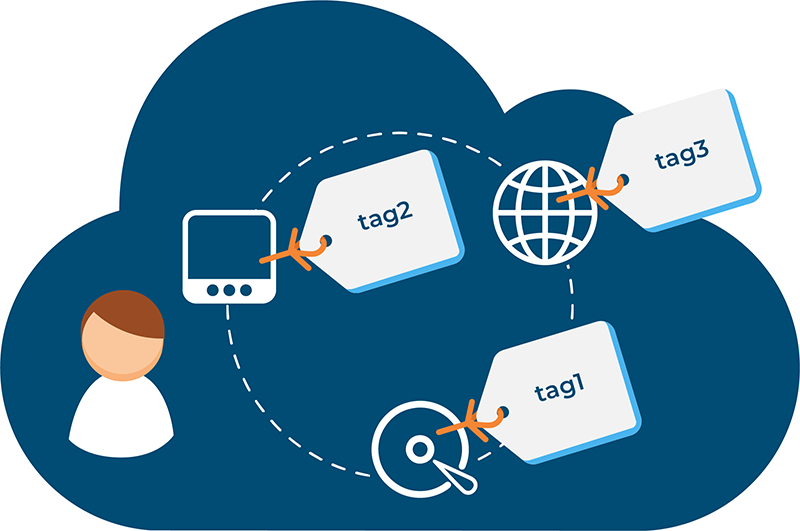
Building a scalable tagging system requires systematic planning across multiple dimensions: architecture design, database schema optimization, caching strategies, search capabilities, automation, and governance. Organizations attempting ad-hoc tagging implementations typically face cascading failures as scale increases—inconsistent tagging, slow search performance, broken automation, and unmaintainable governance. A well-architected tagging system, conversely, scales elegantly from thousands to billions of items, supports complex multi-tag queries efficiently, enables real-time recommendations, and maintains data consistency across distributed systems. This report provides a comprehensive blueprint for building scalable tagging infrastructure, covering architecture patterns, database design, technology stack recommendations, implementation phases, and operational governance. By following this roadmap, organizations can build tagging systems handling 10,000+ requests/second with sub-100ms latency while maintaining consistency and enabling intelligent features.
1.1 Define Tagging Objectives and Use Cases
Before architecting, clarify why tagging matters to the business.
Common tagging objectives:
- Search and Discoverability: Help users find content through keyword search
- Content Organization: Categorize and structure data internally
- Personalization: Enable recommendations and custom experiences
- Compliance and Governance: Track data lineage and regulatory requirements
- Operations: Manage cloud resources, allocate costs, automate workflows
- Analytics: Track metrics and behavior patterns
Example: E-commerce tagging objectives:
- Product discovery: Filter by color, size, material, price range
- Inventory management: Track warehouse location, stock status
- Marketing: Campaign tags, seasonal classifications
- Analytics: Product performance, customer interest patterns
Clarity on objectives determines schema design, indexing strategy, and technology choices.
1.2 Estimate Scale Requirements
Scale requirements determine architecture decisions—a system for 100K items differs substantially from one for 100 billion items.
Key scale questions:
- Items: How many items will be tagged? (thousands, millions, billions)
- Tags: How many unique tags? (tens, thousands, millions)
- Tags per item: How many tags per item on average? (3-5, 10+, variable)
- Users: Concurrent users querying tags? (100, 10,000, 1M+)
- Queries: Read requests per second? (100, 10K, 100K+)
- Writes: Tag operations per second? (10, 1K, 10K+)
- Query complexity: Single tag searches vs. multi-tag AND/OR queries?
- Latency requirements: Real-time (<100ms) vs. eventual consistency (seconds)
Example scale profile:
- 50 million products
- 10,000 unique tags
- 5 tags per product average
- 100,000 concurrent users
- 10,000 read queries/second
- 100 tag write operations/second
- Multi-tag AND/OR queries required
- <200ms latency requirement
This profile drives recommendations toward distributed caching, search indexing, and eventual consistency patterns.
Section 2: Database Schema Design
2.1 Core Schema Architecture
The foundation of any tagging system is the database schema connecting items and tags.
Minimal schema (three tables):
-- Tags lookup table
CREATE TABLE tags (
  id BIGINT PRIMARY KEY AUTO_INCREMENT,
  name VARCHAR(255) UNIQUE NOT NULL,
  category VARCHAR(100),
  created_at TIMESTAMP DEFAULT CURRENT_TIMESTAMP,
  INDEX idx_tags_name (name),
  INDEX idx_tags_category (category)
);

-- Items being tagged
CREATE TABLE items (
  id BIGINT PRIMARY KEY AUTO_INCREMENT,
  item_type VARCHAR(100) NOT NULL,
  title VARCHAR(500),
  content TEXT,
  created_at TIMESTAMP,
  updated_at TIMESTAMP,
  INDEX idx_items_type (item_type),
  INDEX idx_items_created (created_at)
);

-- Junction table connecting items and tags (many-to-many)
CREATE TABLE item_tags (
  item_id BIGINT NOT NULL,
  tag_id BIGINT NOT NULL,
  created_at TIMESTAMP,
  PRIMARY KEY (item_id, tag_id),
  FOREIGN KEY (item_id) REFERENCES items(id) ON DELETE CASCADE,
  FOREIGN KEY (tag_id) REFERENCES tags(id) ON DELETE CASCADE,
  INDEX idx_item_tags_tag (tag_id)
);
Why this schema:
- Normalized: Avoids data duplication; tags stored once
- Flexible: Items can have any number of tags
- Queryable: Efficient JOIN operations for finding items by tag
- Scalable: Supports billions of items/tags through sharding
2.2 Extended Schema for Advanced Features
For production systems, additional tables support analytics, governance, and recommendations.
-- User tagging interactions (for personalization)
CREATE TABLE user_tag_interactions (
  user_id BIGINT,
  tag_id BIGINT,
  interaction_type ENUM('viewed', 'clicked', 'favorited'),
  interaction_count INT DEFAULT 1,
  last_interaction TIMESTAMP,
  PRIMARY KEY (user_id, tag_id),
  INDEX idx_interactions_user (user_id),
  INDEX idx_interactions_tag (tag_id),
  INDEX idx_interactions_type (interaction_type)
);

-- Tag usage statistics (for analytics)
CREATE TABLE tag_stats (
  tag_id BIGINT PRIMARY KEY,
  item_count INT,
  user_count INT,
  view_count BIGINT,
  interaction_count BIGINT,
  last_updated TIMESTAMP,
  FOREIGN KEY (tag_id) REFERENCES tags(id) ON DELETE CASCADE
);

-- Tag validation rules (for governance)
CREATE TABLE tag_rules (
  id INT PRIMARY KEY AUTO_INCREMENT,
  tag_category VARCHAR(100),
  allowed_values TEXT, -- JSON list of valid values
  required BOOLEAN,
  created_by VARCHAR(255),
  created_at TIMESTAMP
);
2.3 Indexing Strategy
Indexing is critical for query performance at scale.
Essential indexes:
-- Fast lookups by item ID
ALTER TABLE item_tags ADD INDEX idx_item_id (item_id);

-- Fast lookups by tag ID
ALTER TABLE item_tags ADD INDEX idx_tag_id (tag_id);

-- Tag autocomplete (prefix search)
ALTER TABLE tags ADD FULLTEXT INDEX ft_tag_name (name);

-- Item type filtering (common query pattern)
ALTER TABLE items ADD INDEX idx_type_created (item_type, created_at);

-- Composite index for common query pattern
ALTER TABLE item_tags ADD INDEX idx_item_tag (item_id, tag_id);

-- For aggregation queries
ALTER TABLE tag_stats ADD INDEX idx_tag_stats_count (item_count DESC);
Indexing performance impact:
Without proper indexing, a query finding all products with 3 specific tags might scan millions of rows. With indexes, it returns results in milliseconds by navigating index structures rather than full table scans.
2.4 Handling Scale: Sharding Strategy
At massive scale (billions of items), single database becomes bottleneck. Sharding distributes load across multiple database instances.
Sharding approaches:
Sharding by Item ID (most common):
Shard 0: Item IDs 0-999,999,999
Shard 1: Item IDs 1,000,000,000-1,999,999,999
Shard 2: Item IDs 2,000,000,000-2,999,999,999
...

Query for item_id = 1,234,567,890:
Hash(1234567890) mod 3 = Shard 1
Considerations:
- Hot shards: Popular tags might skew distribution (e.g., “sale” tag appears in 10% of all items)
- Cross-shard queries: Multi-tag queries might require querying multiple shards
- Rebalancing: As data grows, resharding becomes necessary
Section 3: Caching Strategy
3.1 Multi-Layer Caching Architecture
Caching dramatically improves performance, especially for popular tags.
Cache layers:
- Application-Level Cache (Redis/Memcached)
- Cache popular tags and their items
- Cache tag autocomplete suggestions
- Cache user tag preferences
- Database Query Cache
- Cache expensive JOIN queries
- Cache aggregation results (tag counts, statistics)
- Search Index Cache (Elasticsearch)
- Cache full-text search results
- Cache complex multi-tag queries
Example caching pattern (pseudocode):
def get_items_by_tags(tag_ids, user_id=None):
    # Generate cache key
    cache_key = f"items:tags:{sorted(tag_ids)}"

    # Check cache first
    cached_result = redis.get(cache_key)
    if cached_result:
        return json.loads(cached_result)

    # Cache miss: query database
    items = db.query("""
        SELECT DISTINCT i.* FROM items i
        JOIN item_tags it ON i.id = it.item_id
        WHERE it.tag_id IN (?)
        GROUP BY i.id
        HAVING COUNT(DISTINCT it.tag_id) = ?
    """, tag_ids, len(tag_ids))

    # Store in cache (1 hour TTL)
    redis.setex(cache_key, 3600, json.dumps(items))

    return items
3.2 Cache Invalidation
Cache is valuable only if it remains accurate. Invalidation strategy prevents stale data.
Invalidation approaches:
- Time-Based (TTL): Cache expires after fixed duration (1 hour, 24 hours)
- Simple, but risksStale data
- Good for data changing infrequently
- Event-Based: Invalidate cache when underlying data changespython
def add_tag_to_item(item_id, tag_id): db.insert(item_tags, (item_id, tag_id)) # Invalidate relevant caches redis.delete(f"items:tags:*{tag_id}*") redis.delete(f"item:{item_id}:*") redis.delete(f"tag:{tag_id}:*") - Distributed Invalidation: In multi-server systems, invalidate cache across all nodes
- Use message queue (RabbitMQ, Kafka) to broadcast invalidation events
- All servers receive notification to clear local caches
Section 4: Search and Discovery
4.1 Full-Text Search Implementation
For tagging to be useful, users must find tags efficiently. Full-text search enables this.
Search technologies:
Option 1: Elasticsearch
- Powerful full-text search with fuzzy matching
- Supports complex queries (AND, OR, wildcard, range)
- Built-in autocomplete with edge n-gram tokenization
- Trade-off: Operational complexity, resource overhead
Option 2: Redis Search (RediSearch)
- In-memory search engine on top of Redis
- Fast autocomplete (microseconds)
- Simpler operations than Elasticsearch
- Trade-off: Less powerful than Elasticsearch
Option 3: PostgreSQL Full-Text Search
- Built-in to PostgreSQL
- Simpler than Elasticsearch, less powerful
- Trade-off: Slower than specialized search engines
Example: Elasticsearch tag autocomplete
// Create autocomplete index with edge n-grams
{
  "settings": {
    "analysis": {
      "analyzer": {
        "autocomplete": {
          "tokenizer": "standard",
          "filter": ["lowercase", "edge_ngram"]
        }
      },
      "filter": {
        "edge_ngram": {
          "type": "edge_ngram",
          "min_gram": 1,
          "max_gram": 20
        }
      }
    }
  },
  "mappings": {
    "properties": {
      "tag_name": {
        "type": "text",
        "analyzer": "autocomplete",
        "fields": {
          "keyword": {"type": "keyword"}
        }
      }
    }
  }
}

// Query for autocomplete: "pro" finds "product", "production", "profile"
{
  "query": {
    "match": {
      "tag_name": {
        "query": "pro",
        "analyzer": "standard"
      }
    }
  }
}
4.2 Multi-Tag Query Performance
Efficient multi-tag queries (e.g., “show items tagged with BOTH ‘sale’ AND ‘electronics’ BUT NOT ‘clearance'”) require careful optimization.
Optimization patterns:
Pattern 1: Redis Set Operations (for moderate scale)
items_with_sale = redis.smembers("tag:sale:items")
items_with_electronics = redis.smembers("tag:electronics:items")
items_without_clearance = redis.smembers("tag:clearance:items")

result = items_with_sale & items_with_electronics - items_without_clearance
Pattern 2: Database Query Optimization
SELECT i.* FROM items i
WHERE i.id IN (
  SELECT item_id FROM item_tags WHERE tag_id = 1  -- sale
  INTERSECT
  SELECT item_id FROM item_tags WHERE tag_id = 2  -- electronics
  EXCEPT
  SELECT item_id FROM item_tags WHERE tag_id = 3  -- clearance
)
LIMIT 100
Pattern 3: Search Index (most scalable)
Elasticsearch query combining must/must_not/should clauses
- Must include: tag:sale, tag:electronics
- Must not include: tag:clearance
Section 5: Implementation Phases
5.1 Phase 1: MVP (Months 0-2)
Minimal viable product focusing on core functionality.
Scope:
- Single database instance (PostgreSQL or MySQL)
- Basic tag CRUD operations
- Single-tag search
- No caching
- Manual tagging
Technology stack:
- Database: PostgreSQL (built-in full-text search)
- API: Node.js/Express or Python/FastAPI
- Frontend: React/Vue
Deliverables:
1. Core database schema (tags, items, item_tags tables)
2. REST API:
   - POST /tags - create tag
   - GET /tags/{id} - retrieve tag
   - POST /items/{id}/tags - add tag to item
   - GET /items?tag_ids=1,2,3 - search by tags
3. Tag management UI
4. Basic performance monitoring
5.2 Phase 2: Scaling and Features (Months 2-4)
Add caching, search, and automated tagging.
Additions:
- Redis caching layer
- Elasticsearch for advanced search
- Tag autocomplete
- Multi-tag queries (AND/OR logic)
- Basic AI-powered tag suggestions
Technology additions:
- Cache: Redis
- Search: Elasticsearch
- ML: Simple ML model for tag recommendations
Deliverables:
1. Redis integration for caching popular tags
2. Elasticsearch index for tag search/autocomplete
3. Advanced query API supporting multi-tag filters
4. Auto-tagging service (experimental)
5. Tag usage analytics dashboard
5.3 Phase 3: Enterprise Scale (Months 4-6)
Support billions of items and thousands of QPS.
Additions:
- Database sharding
- Distributed caching
- Advanced ML/AI integration
- Event-driven architecture for invalidation
- Comprehensive governance and compliance
Architecture changes:
- Add message queue (Kafka) for event streaming
- Implement database sharding by item_id
- Add cache warming strategies
- Multi-region deployment
- Advanced monitoring and alerting
Deliverables:
1. Database sharding implementation
2. Distributed cache invalidation
3. Advanced recommendation engine
4. Real-time tag analytics
5. Compliance audit trails
6. Disaster recovery procedures
Section 6: Technology Stack Recommendations
6.1 Database Layer
| Requirement | Recommendation | Why |
|---|---|---|
| Simple, proven | PostgreSQL or MySQL | Built-in full-text search; ACID guarantees; mature ecosystem |
| Scaling beyond single instance | PostgreSQL + Sharding | PostgreSQL is robust; sharding handles scale |
| NoSQL requirement | MongoDB with indexes | Flexible schema; scales horizontally; good for sparse tagging |
| Extreme scale | Cloud databases (BigQuery, Redshift) | Managed scaling; built-in optimization; cost effective at scale |
6.2 Caching Layer
| Requirement | Recommendation | Why |
|---|---|---|
| Simple, fast | Redis | In-memory; microsecond latency; rich data structures (sets for tag operations) |
| Distributed caching | Redis Cluster | Multiple nodes; failover; scales to billions of entries |
| Alternative | Memcached | Simpler than Redis; pure in-memory; slightly faster for basic caching |
6.3 Search Layer
| Requirement | Recommendation | Why |
|---|---|---|
| Full-featured search | Elasticsearch | Powerful; flexible queries; built-in autocomplete; production-ready |
| Simpler than Elasticsearch | Redis Search | In-memory search; low latency; operational simplicity |
| Integrated solution | PostgreSQL + pgvector | If staying in PostgreSQL; good for smaller scales |
6.4 Message Queue (for event-driven architecture)
| Requirement | Recommendation | Why |
|---|---|---|
| Simple pub/sub | Redis Pub/Sub | Built-in to Redis; low latency; simple semantics |
| Durable events | Apache Kafka | Persistent event log; replay capability; scales to high throughput |
| Cloud-native | AWS SQS/SNS or GCP Pub/Sub | Managed; scalable; no operational overhead |
6.5 Example Stack Recommendation (high-scale startup)
Frontend:      React + TypeScript
API Gateway:   Kong or AWS API Gateway
Backend:       Node.js + Express + TypeScript
Cache:         Redis Cluster (3+ nodes)
Search:        Elasticsearch (3+ nodes)
Database:      PostgreSQL (multi-shard)
Message Queue: Apache Kafka
Monitoring:    Prometheus + Grafana + ELK Stack
Container:     Docker + Kubernetes
Section 7: Operational Governance and Maintenance
7.1 Tagging Standards and Validation
Governance prevents tagging chaos as systems scale.
// Tag validation rules
const tagRules = {
  name: {
    maxLength: 255,
    pattern: /^[a-z0-9-]+$/,  // lowercase, numbers, hyphens
    required: true
  },
  category: {
    allowed: ['product', 'campaign', 'audience', 'status'],
    required: true
  },
  uniqueness: 'enforced at database level'
};

// Validation before insertion
function validateTag(tag) {
  const errors = [];

  if (!tag.name || tag.name.length > 255) {
    errors.push("Name required, max 255 chars");
  }

  if (!/^[a-z0-9-]+$/.test(tag.name)) {
    errors.push("Name must be lowercase, alphanumeric, hyphens only");
  }

  if (!tagRules.category.allowed.includes(tag.category)) {
    errors.push(`Category must be one of: ${tagRules.category.allowed}`);
  }

  return { valid: errors.length === 0, errors };
}
7.2 Automated Maintenance
At scale, manual maintenance is impossible. Automation maintains system health.
Scheduled maintenance tasks:
# Weekly: Audit tag coverage
def audit_tag_coverage():
    unused_tags = db.query("""
        SELECT t.* FROM tags t
        LEFT JOIN item_tags it ON t.id = it.tag_id
        WHERE it.tag_id IS NULL
        AND t.created_at < DATE_SUB(NOW(), INTERVAL 30 DAYS)
    """)

    for tag in unused_tags:
        tag.mark_for_deletion()

# Daily: Recompute tag statistics
def update_tag_stats():
    for tag in db.query("SELECT * FROM tags"):
        stats = db.query(f"""
            SELECT COUNT(DISTINCT item_id) as item_count,
                   COUNT(*) as assignment_count
            FROM item_tags WHERE tag_id = {tag.id}
        """)
        tag_stats.update(tag.id, stats)

# Hourly: Cache warming for hot tags
def warm_cache():
    hot_tags = db.query("""
        SELECT * FROM tag_stats
        ORDER BY item_count DESC
        LIMIT 100
    """)

    for tag in hot_tags:
        items = db.query(f"""
            SELECT i.* FROM items i
            JOIN item_tags it ON i.id = it.item_id
            WHERE it.tag_id = {tag.id}
            LIMIT 1000
        """)
        redis.setex(f"tag:{tag.id}:items", 3600, json.dumps(items))
7.3 Monitoring and Alerting
System health requires comprehensive monitoring.
Key metrics to monitor:
Performance:
  - Tag search latency (p50, p95, p99) - target: <100ms
  - API response time - target: <500ms
  - Cache hit rate - target: >80%
  - Search index response time - target: <50ms

Scale:
  - Query throughput (QPS) - expected vs. actual
  - Database connections - alert if >80% of pool
  - Cache memory usage - alert if >85% capacity
  - Search index size - track growth

Data Quality:
  - Untagged items - should be <5%
  - Invalid tag patterns - should be 0%
  - Duplicate/orphan tags - monitor trends

Business:
  - Tags per item (distribution) - ensure consistent
  - Tag creation rate - spot anomalies
  - Most/least used tags - inform governance
Building a scalable tagging system requires careful planning across architecture, database design, caching, search, and operations. Organizations that systematically address these dimensions—starting with clear objectives, designing normalized schemas with proper indexing, implementing multi-layer caching, adding search capabilities, and establishing governance—can scale from thousands to billions of items while maintaining sub-100ms latency and high data consistency.
The phased approach—MVP, then scaling features, then enterprise scale—enables organizations to launch quickly and evolve architecture as needs grow. Technology choices matter but are secondary to architectural principles: decomposition into services, loose coupling, eventual consistency where appropriate, and comprehensive monitoring.
The result is infrastructure supporting intelligent features (recommendations, autocomplete, complex queries) while maintaining operational simplicity through automation and governance. Organizations invested in proper tagging infrastructure extract disproportionate value—improved discoverability, better analytics, powerful personalization, and operational efficiency through automation.